Update 1
A call for increased emphasis on nutrition to improve outcomes in patients with liver disease
Malnutrition in patients with liver disease is common and associated with worse outcomes, including morbidity, mortality, length of stay and increased perioperative transplant complications.1–3 Sarcopenia is an important feature of liver disease-related malnutrition, and can co-exist with calorie excess or volume overload across a spectrum of malnutrition phenotypes. The risk of malnutrition is greatest in patients with alcohol-associated liver disease and alcohol-associated hepatitis whose muscle loss is driven by inadequate protein intake and inflammatory muscle catabolism.1–5 Historically, guidance for nutrition in liver disease has been limited by patient complexity and a lack of large, randomized trials, with many active recommendations informed by past research on nutrition in critically ill patients who may not have liver disease. This remains true, although there are ongoing efforts to close these gaps in knowledge. Recent guidelines by the American College of Gastroenterology (ACG) aim to address the unique challenges in managing malnutrition in patients with liver disease, informed by the most recent evidence.6
The new ACG guidelines emphasize the importance of assessing malnutrition in all patients with liver disease.6 The authors, who were selected by ACG given content expertise, propose a series of guideline recommendations based upon literature review (prioritizing systematic reviews and meta-analyses, followed by randomized control trials when available) and key concept statements based on expert opinion. These recommendations span both outpatient and inpatient management, but for the purposes of this review, the focus will be on inpatient.
ACG recommends that hospitalized patients with cirrhosis receive early enteral or oral nutrition. Prolonged fasting of more than 12 hours can lead to gluconeogenesis and muscle wasting and should thus be avoided. Late-night snacks should be encouraged. Notably, dietary protein restrictions in patients with cirrhosis are no longer recommended. More recent studies suggest that limiting protein intake may result in increased muscle wasting and relatively greater ammonia production compared to protein-restricted diets, thereby increasing the risk of hepatic encephalopathy (HE). While the ACG does not set a protein target, recent American Association for the Study of Liver Diseases (AASLD) guidelines specify that protein goals for critically ill patients with cirrhosis should be the same as for patients without cirrhosis: 1.2-2.0 grams of protein per kilograms of ideal body weight.7 Furthermore, multidisciplinary collaboration, including early consultation of nutrition teams, improves outcomes.7 When possible, ACG recommends supplementing with vegetarian sources of protein for patients experiencing HE. Vegetarian sources of protein have higher arginine and fiber content, facilitating increased urea production and an acidic colonic environment, respectively. These effects result in lower ammonia levels than in diets high in animal protein.
For patients with ascites and diuretic use, there is unclear benefit to sodium restricted diets (ACG could not recommend for or against it, although the AASLD does recommend 2000 mg or less daily). Furthermore, there is no role for fluid restrictions unless necessitated in the management of severe hyponatremia (defined as < 126 mEq/L). Long-term, there is evolving understanding of the role of nutrition in preventing progression of liver disease, including vitamin E supplementation in patients with metabolic dysfunction-associated steatohepatitis (MASH) without cirrhosis, and encouraging low-fructose/sucrose diets as high-fructose/sucrose metabolism is associated with liver fibrosis via lipogenesis, hepatic inflammation and gut dysbiosis.
Take away: Malnutrition in hospitalized patients with cirrhosis is associated with worse outcomes; ACG recommends early administration of oral or enteral nutrition supplementation. Patients should eat a high-protein diet (preferably plant-based) with frequent meals including a bedtime snack to minimize the progression of sarcopenia, maximize clearance of ammonia and reduce the risk of ascites. Evidence for sodium restriction to 2000 mg daily is not robust but likely remains reasonable. There is no evidence for fluid restriction unless patients have severe hyponatremia.
Update 2
Tapered corticosteroids for treatment of alcohol-associated hepatitis may reduce infection risk without compromising efficacy
Alcohol-associated hepatitis (AAH) is a condition of alcohol-associated liver injury characterized by rapid onset of jaundice. Patients often present with systemic symptoms of malaise and anorexia, tender hepatomegaly, and systemic inflammatory response syndrome; labwork is notable for hepatocellular injury with elevated aminotransferases (classically a ratio of AST to ALT of 1.5 or greater, not exceeding upper limit of 400 IU/ml) and elevated bilirubin (at least 3 mg/dL).8,9 Patients with severe AAH (defined by American College of Gastroenterologists (ACG) as Model for End-Stage Liver Disease (MELD) > 20) should be hospitalized for management, due a high risk of mortality (90-day mortality of 30%).9,10 While hospitalized, ACG strongly recommends that these patients be treated with corticosteroids if they do not have a contraindication (e.g., active infection including viral hepatitis). Patients should be assessed for steroid responsiveness at day 4 or 7 using Lille score; if non-responders, steroids should be stopped.9
The biggest concern regarding corticosteroid treatment is further elevation of the already high risk of infection that is associated with AAH.9,11 This side effect is important to minimize given the benefits of steroids are felt to be modest. Kulkarni et al’s recent study aimed to find out whether a lower exposure to steroids via a tapering regimen would reduce the side effect profile of this treatment of AAH, while maintaining its benefits.12 Their open-label multicenter randomized control study assigned adult patients with severe AAH to two treatment arms: 1) “fixed dose” prednisolone (40 mg daily for 28 days), versus 2) “tapered dose” prednisolone (40 mg daily tapered by 10 mg weekly for a total of 28 days). Adjuvant treatments including N-acetylcysteine, albumin infusions, and prophylactic antibiotics were at the discretion of clinicians. As per ACG guidelines, response to steroids was assessed on day 7 by Lille score, and steroids were stopped for non-responders. Patients were selected at 4 study sites in India and 1 in Canada; they were excluded if they had active infection, hepatitis B infection, human immunodeficiency virus, uncontrolled DM, acute kidney injury (AKI) or chronic kidney disease, recent variceal bleed, among a few other acute conditions. The primary outcome was the diagnosis of infection (initially made by frontline clinicians and later verified by blinded infectious disease doctors). Secondary outcomes were mortality, severity score (MELD), AKI, hospitalization, and adverse events.
Ultimately 254 patients were randomized to the two groups and underwent an intention-to-treat analysis. The mean age was 41 years old, and 98% were men. The mean MELD was 26, and baseline characteristics (including comorbidities, adjuvant medications, and laboratory results) were comparable between the two study arms. On day 90, patients in the “tapered dose” group had a significantly lower incidence of infection compared to the standard “fixed dose” group (20% versus 33%, respectively, p = 0.02). After further analysis with adjustment for covariates, the hazard ratio was 0.34 (p = 0.01). Also, at 90 days, 9% of patients receiving “tapered dose” had microbiologically proven infections, compared with 19% receiving “standard dose” (P < 0.02). The most common infections were lung, urinary tract infection, and spontaneous bacterial peritonitis.
Mortality was similar between the groups (13% “tapered” versus 17% “standard”; p= 0.48), as was AKI (19% versus 27%; p = 0.19). There was a trend towards lower adverse events for the “tapered dose” group (49% versus 60% respectively, p = 0.07). The total number of hospitalizations at 90 days was lower for the “tapered” group (45 versus 65, p = 0.01), and there was a trend towards lower rate of hospitalization for the “tapered” group as well (33% of patients versus 44% of patients; p = 0.07). Importantly, there was no difference in the severity score between the groups; in other words, the MELD score changed in a similar fashion regardless of steroid dosing (e.g., by day 90, 59% of “tapered dose” achieved a MELD of < 17 versus 57% of “fixed dose” patients, p = 0.75).
Limitations to this study include the fact that the study population was overwhelmingly male and the lack of standardization in terms of adjuvant treatments of AH (e.g., N-acetylcysteine). Additionally, although the researchers attempted to mitigate the open-label nature by vetting infection diagnoses by blinded infectious disease physicians, the initial diagnoses are at risk for bias.
Take-away: Treating AAH with a tapered dose of steroids, compared to standard-of-care fixed dose, appears to offer a lower risk of infection while maintaining the treatment’s efficacy. Although quite compelling, the evidence would be strengthened with a follow-up study that includes a better representation of female patients and ideally is fully blinded.
Update 3
A Systematic Clinical Decision-Making Approach to Portal Vein Thrombosis in Cirrhosis
Portal vein thrombosis (PVT) is a common complication of cirrhosis, increasing in prevalence concomitantly with the severity of cirrhosis.13 The American Gastroenterological Association (AGA) recently released an update on the management of PVT in patients with cirrhosis.14 Included are eleven best practice advice statements to guide evidence-informed, practical decision-making in an area long marked by clinical variation and uncertainty. Their expert review is based on societal guidelines and pertinent literature, which underwent internal peer review through the AGA prior to submission for standard external peer review.
Anticoagulation has been shown to favor portal vein recanalization and reduce thrombus progression, which may improve portal hypertension and lower the risk of hepatic decompensation events such as variceal bleeding.15 Certain characteristics of the thrombus and of the patient generally favor an anticoagulation vs. an observation strategy. This update emphasizes a structured approach that integrates radiologic findings, extent of thrombosis, and key patient characteristics to support individualized, high-value care.
For patients with cirrhosis who are diagnosed with a PVT by ultrasound, the AGA recommends cross sectional imaging (CT or MRI) to characterize vascular extensiveness of the thrombus and degree of lumen occlusion. Importantly, these patients should not undergo an evaluation for hypercoagulability, as the formation of thrombus is not due to an inherited thrombophilia but rather changes in portal flow in the setting of cirrhosis.
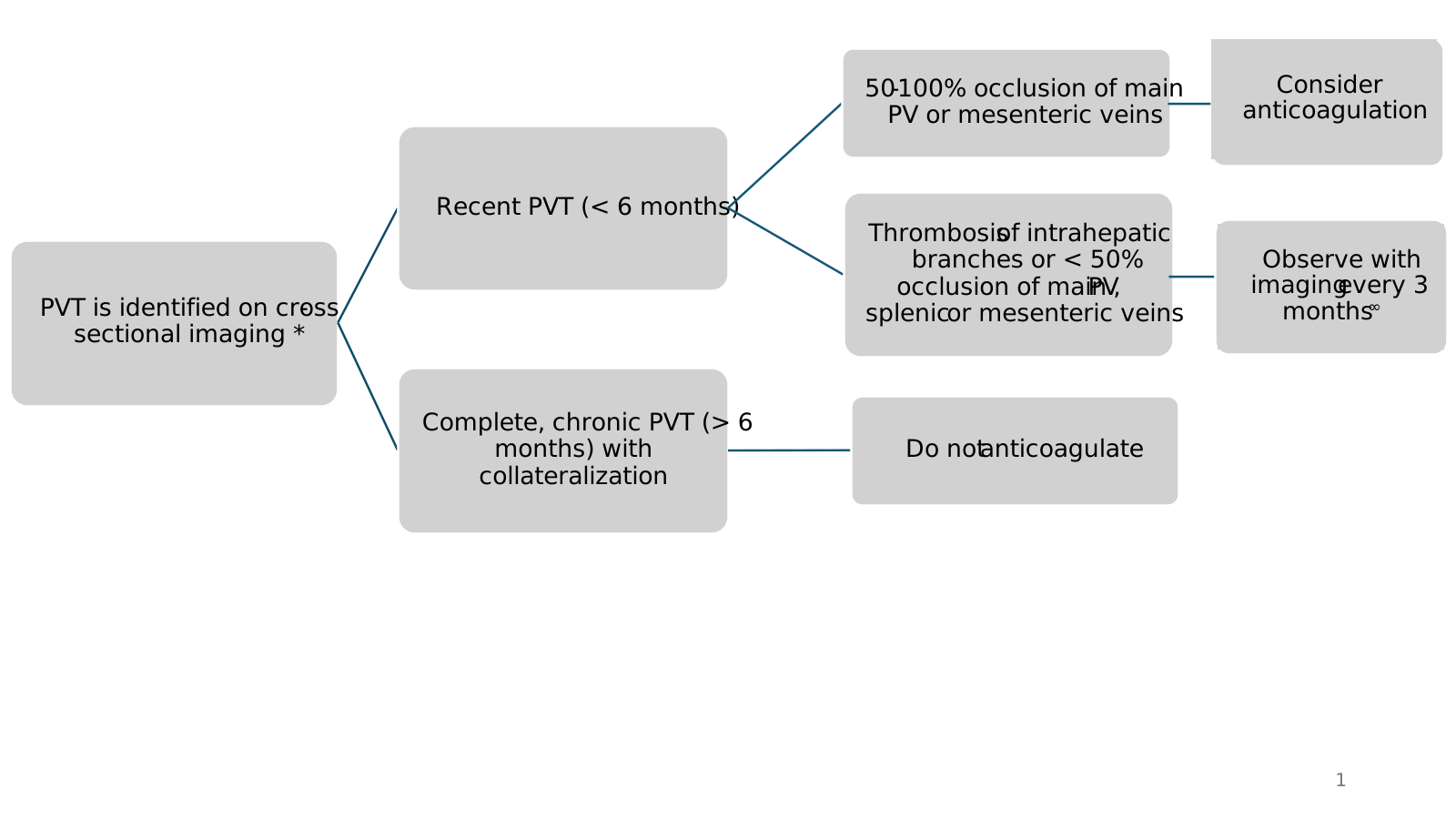
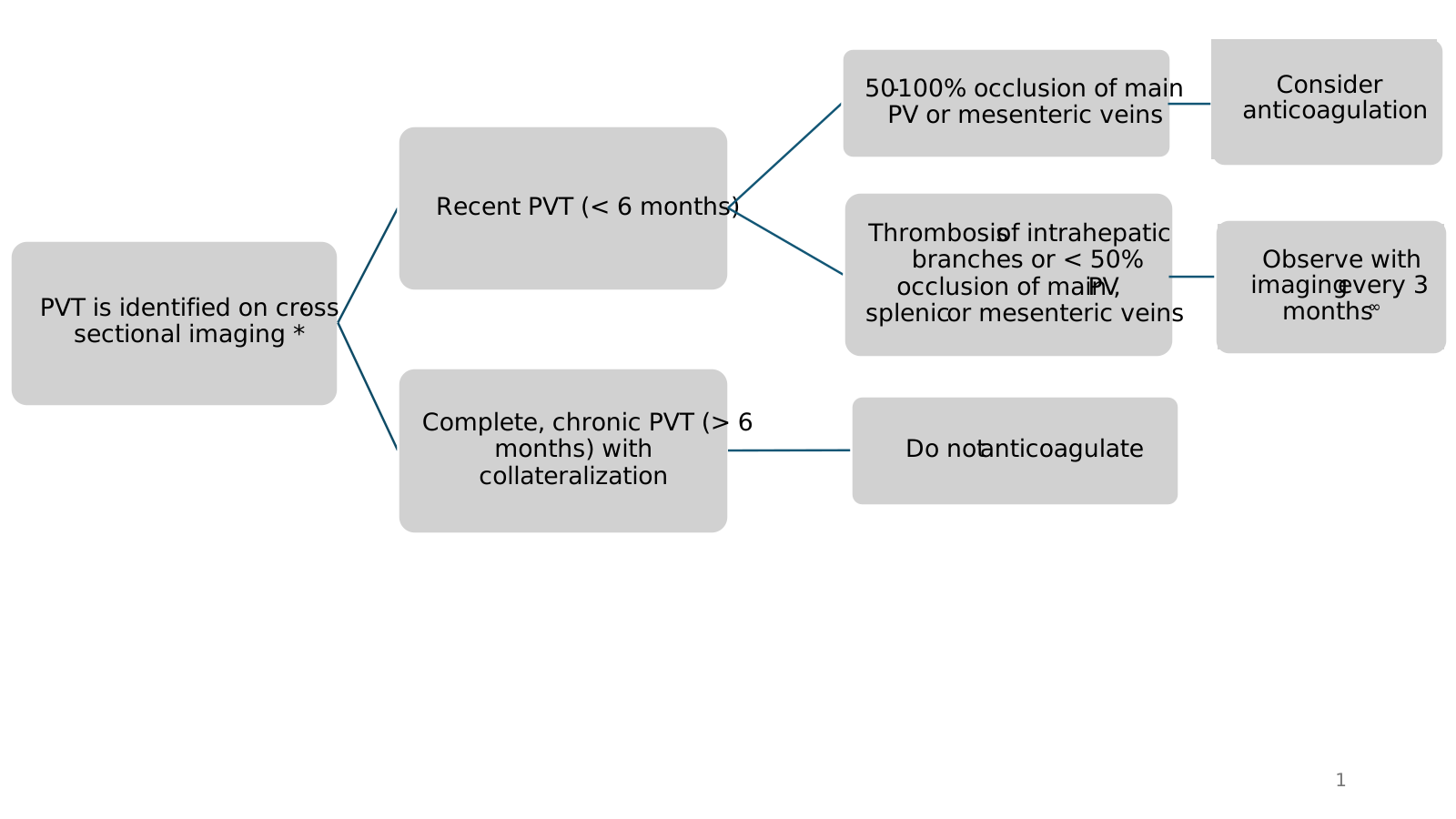
If there is evidence of intestinal ischemia associated with the PVT, the AGA recommends urgent anticoagulation. In contrast, patients found to have chronic PVT with complete occlusion with collateralization should not be anticoagulated. Most other anticoagulation decisions are more nuanced and often require observation with surveillance imaging rather than immediate anticoagulation (Figure 1).14 Patients who particularly benefit from anticoagulation include those with a hypercoagulable disorder, those awaiting liver transplantation, or those demonstrating evidence of PVT progression.
Although more data are available for vitamin K antagonists and low-molecular weight heparin (LMWH) to treat patients with PVT, the AGA supports the use of direct oral anticoagulants (DOACs) as a more convenient choice for patients with compensated (Child-Pugh Class A and B) disease. For Child-Pugh Class C disease, the AGA still recommends LMWH. The AGA does recommend all patients receive endoscopic variceal screening prior to initiation of anticoagulation unless they are already taking a non-selective beta blocker.
Takeaway: The 2025 AGA update provides a clear, stepwise framework for managing PVT in cirrhosis—helping clinicians balance the risks and benefits of anticoagulation. Anticoagulation is not always required, but ongoing imaging surveillance is essential in nearly all cases. When indicated, DOACs represent a practical and increasingly supported option for many patients with compensated disease. By incorporating these recommendations, clinicians can standardize care, reduce unnecessary interventions, and optimize outcomes for patients with cirrhosis and PVT.
Acknowledgments
Figure 1 was created by the authors based upon Figure 2 from Davis et al., 2025.
Disclosures/Conflicts of Interest
None
Corresponding author
Lesley B. Gordon, MD
Division of Hospital Medicine Department of Medicine,
Internal Medicine Residency, MaineHealth Maine Medical Center
Email: lesley.gordon@mainehealth.org