Background
HER2-positive breast carcinoma accounts for about 15–20% of breast cancers and is defined as evidence of HER2 protein overexpression.1 It is well-known for its propensity to metastasize to the central nervous system (CNS), often presenting with parenchymal or leptomeningeal involvement. However, pituitary metastasis remains an extremely rare manifestation.2 Historically, such presentations of metastatic cancers leading to infiltrative disease of the pituitary were often terminal events in life or even diagnosed at post-mortem.3
We present an unusual case of recurrent admission for lethargy with hypernatremia. After an extensive work-up, the patient was diagnosed with panhypopituitarism (PH) as a result of infiltrative disease of the pituitary from recurrence of ER/PR-negative, HER2-positive breast cancer. Of particular interest, recent advances in the management of HER2-positive breast carcinoma with CNS metastasis have led to favorable outcomes, including complete resolution of the clinical presentation and survival benefit. This case offers an important educational point for hospitalists by illustrating how recurrent hypernatremia and lethargy may be the presenting manifestations of panhypopituitarism from pituitary metastasis of HER2-positive breast cancer, a rare but increasingly treatable condition in the era of modern targeted therapies.
CASE PRESENTATION
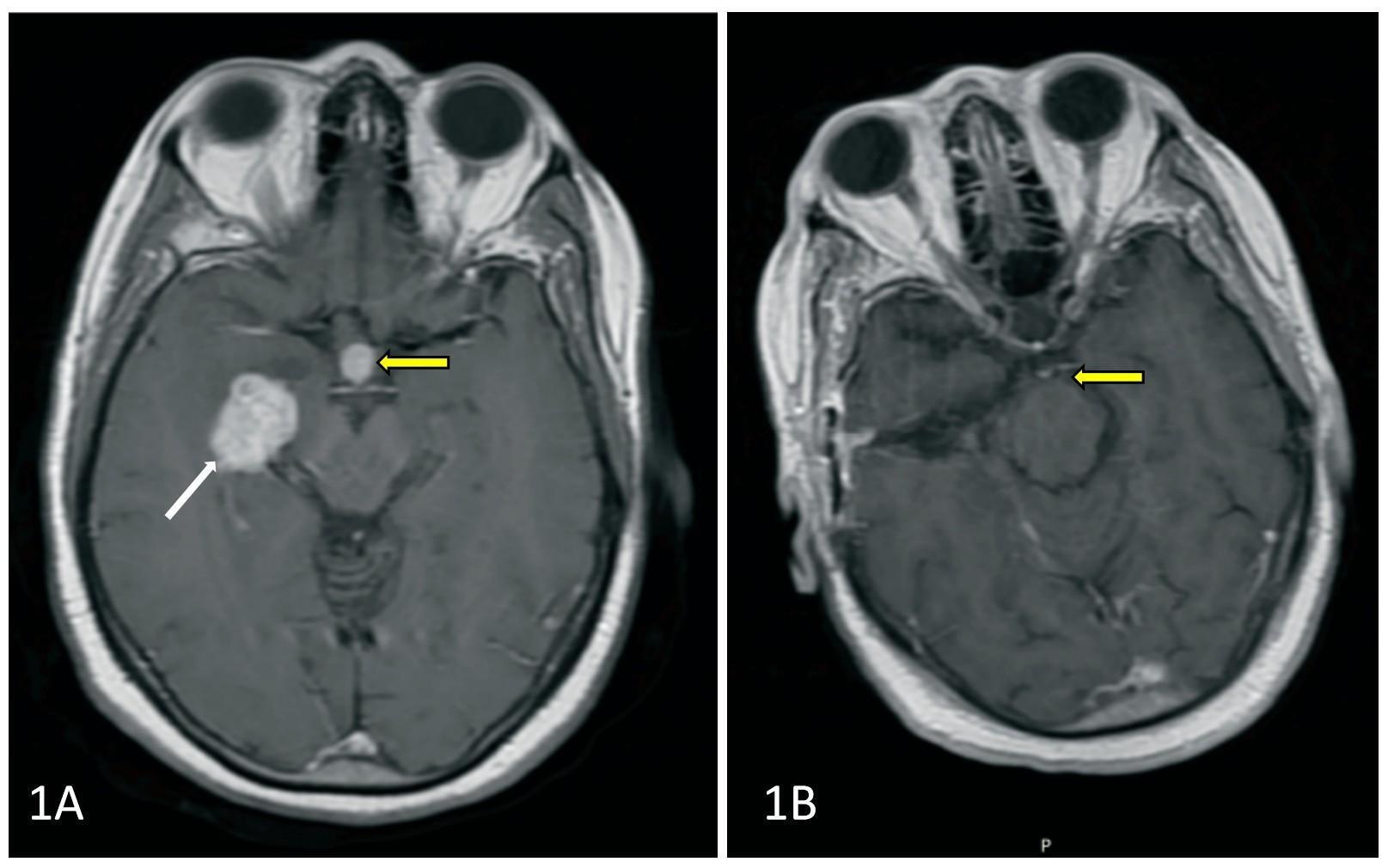
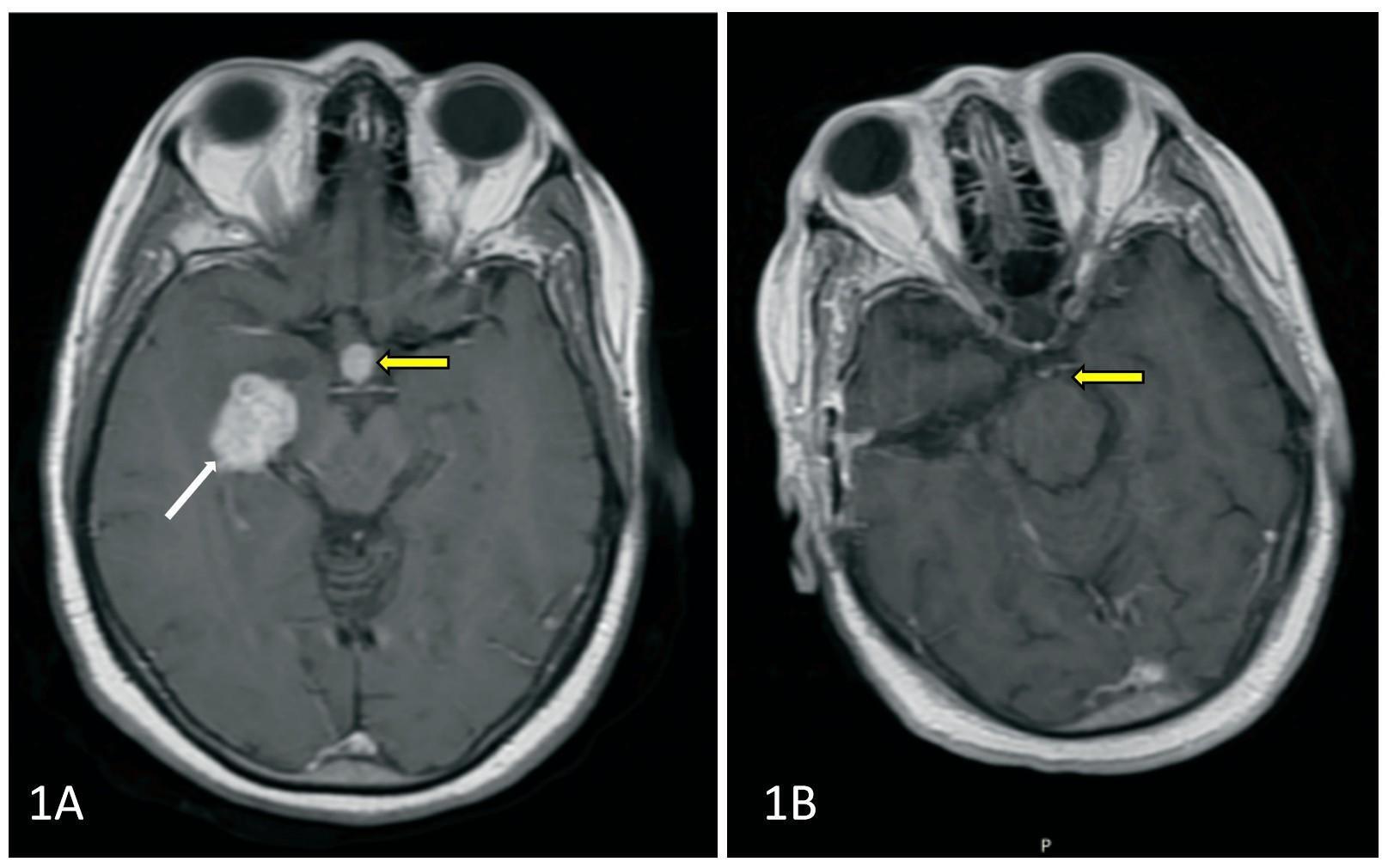
A 67-year-old black female with a history of right-sided breast cancer [ER/PR-negative, HER2-positive (3+), and with a high proliferative index (Ki-67: 65%)] diagnosed 6 years ago had previously undergone neoadjuvant chemotherapy (paclitaxel with trastuzumab and pertuzumab followed by doxorubicin/cyclophosphamide with pegfilgrastim) followed by lumpectomy with sentinel lymph node biopsy (negative for metastatic disease). Three years after completing treatment, she presented to the emergency department with fatigue. She also had weight loss, decreased appetite on admission, and a serum sodium of 145 mmol/L. The patient was given 500 mg of levetiracetam for seizure prophylaxis, and an MRI was ordered after a CT Head revealed 2 lesions concerning for metastatic malignancy. The patient was admitted to the intensive care unit, where her serum Na rose to the 150s mmol/L in the next 1-2 days. MRI identified a right temporal lobe mass (Figure 1A) with a suprasellar enhancement that may suggest a suprasellar metastatic lesion in the appropriate context. Surgical resection of the right temporal lesion was performed two days after admission. Histopathology confirmed metastatic carcinoma consistent with breast origin, now showing ER positivity (40%), PR-negativity, and maintained HER2 overexpression (3+). The suprasellar enhancement suggestive of micrometastases in the clinical context was managed non-invasively with appropriate endocrinological management, whole-brain radiotherapy (WBRT) and systemic fam-trastuzumab deruxtecan-nxki.
The patient was suspected to have central diabetes insipidus due to her increased serum Na, history of polyuria and polydipsia, and metastatic pituitary lesion. In addition, her consistently low TSH and free T4 (TSH = 0.05 mIU/L and free T4 = 0.66 ng/dL five days after surgery) raised concern for central hypothyroidism. Finally, the patient was taking dexamethasone for cerebral edema following her surgery, which could be masking a secondary adrenal insufficiency. Given the patient’s central diabetes insipidus, central hypothyroidism, and possible secondary adrenal insufficiency, the patient was suspected to have panhypopituitarism, likely due to her pituitary lesion.
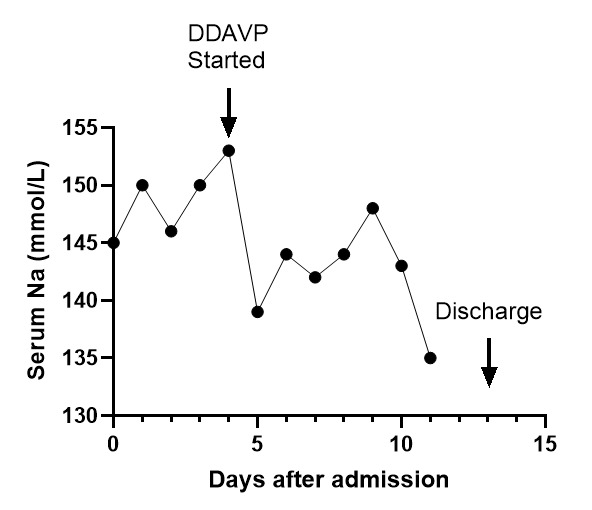
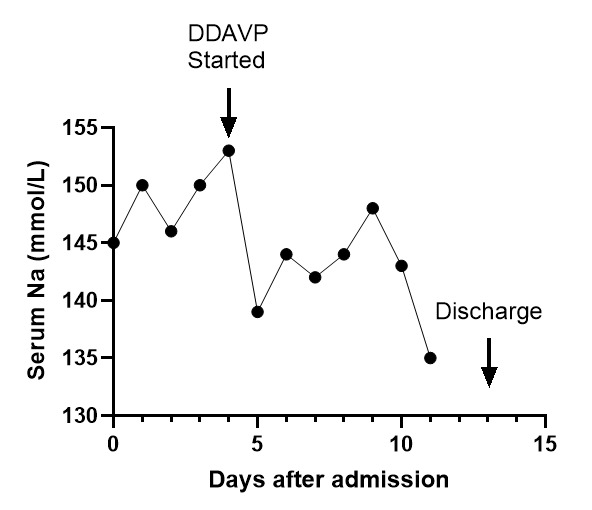
The patient was started on 0.25 mcg IV desmopressin (DDAVP) 2 days following her right temporal lesion surgery, and her serum Na dropped from 153 mmol/L to 139 mmol/L the next day. A graphical trend of her serum Na during her hospital stay is presented in Figure 2. The patient was also started on 50 mcg levothyroxine for hypothyroidism. She was continued on 4 mg/mL dexamethasone injection for cerebral edema with a plan to taper it as her condition improves. The patient’s hospital stay was 13 days: after she was stabilized clinically, she was discharged on DDAVP 10 mcg spray nightly, levothyroxine 50 mcg daily, dexamethasone 4 mg tablet twice daily, and apixaban 2.5 mg twice daily for venous thromboembolism prophylaxis. Five days following discharge, she saw an oncologist as an outpatient and was started on fam-trastuzumab deruxtecan-nxki (5.4 mg/kg).
The patient was readmitted eleven days after her initial discharge with a primary concern for hypernatremia (serum Na = 167 mmol/L). Due to a multifactorial concern for adherence to self-administration of DDAVP, appropriate monitoring in the outpatient setting, and patient preference, DDAVP was self-discontinued by the patient two days prior to the second admission. The patient’s head CT showed stable changes from prior head CTs, and she was restarted on DDAVP 10 mcg nasal spray nightly. She was admitted to the inpatient floor for serum Na monitoring. The patient’s hospital course lasted 32 days and was complicated by persistent lethargy despite resolution of hypernatremia with continuation of DDAVP treatment. Following one dose of 24 mg dexamethasone and a large-volume lumbar puncture (initial opening pressure of 17cm H2O, removal of 23 mL CSF, and a closing pressure of 7cm H2O), the patient’s mental status improved significantly. The patient also completed one course of whole-brain radiotherapy (WBRT) for her pituitary metastasis and continued taking fam-trastuzumab deruxtecan-nxki (5.4 mg/kg). The patient was discharged on dexamethasone 2 mg daily and levothyroxine 75 mcg daily, with the plan to take DDAVP spray nightly if her serum Na reaches > 140 mmol/L. At outpatient oncology follow-up three months after starting fam-trastuzumab deruxtecan-nxki, the patient demonstrated clear signs of neurological improvement, both clinically and radiologically (Figure 1B).
DISCUSSION
Breast carcinoma is the second most common cause of brain metastases (BM), which occur in approximately 10–16% of breast cancer patients.4 Incidence rates of BM in patients harboring HER2 amplification range from 25 to 34%.5 HER2-positive breast cancer is recognized for its aggressive clinical behavior and its strong predilection for central nervous system (CNS) metastasis.1,6 However, metastasis involving the hypothalamic-pituitary axis resulting in panhypopituitarism and central diabetes insipidus (CDI) is exceedingly rare.1
The underlying cause of central diabetes insipidus is deficient synthesis or inadequate secretion of arginine vasopressin (AVP) upon osmotic stimulation. This deficiency is usually acquired from disorders causing a disruption in the neurohypophysis.7 After several years of remission, the patient presented with multiple hospital admissions for altered mental status and hypernatremia- an unusual and unexpected clinical picture. The eventual diagnosis of recurrent HER2-positive breast cancer, manifesting as CNS involvement, was surprising and highlights the need to consider oncologic recurrence even in atypical presentations. This case highlights the need to consider a broad differential diagnosis in patients with unexplained neurological and metabolic disturbances, particularly those with a prior history of aggressive malignancies.
The cornerstone of CDI management involves prompt correction of hypernatremia through DDAVP administration and careful fluid replacement.8 In this case, successful stabilization required precise titration of DDAVP and meticulous fluid management to maintain serum sodium within a narrow therapeutic window. Importantly, the patient’s second admission with severe hypernatremia (serum Na 167 mmol/L) followed discontinuation of her DDAVP spray two days earlier. This case therefore emphasizes the importance of patient and caregiver education at discharge, teaching them to recognize signs of hypernatremia, providing clear instructions on dosing and when to seek care, and arranging early endocrinology follow-up.
In the current era of oncology, metastatic breast cancer with central nervous system (CNS) involvement is becoming increasingly treatable. Traditionally, patients received WBRT, which, while effective in controlling CNS disease, is often associated with significant cognitive decline.9 Recent advances have introduced targeted therapies such as fam-trastuzumab deruxtecan-nxki, which is an antibody-drug conjugate composed of a humanized monoclonal antibody that specifically targets HER2.10 Fam-trastuzumab deruxtecan-nxki demonstrated prolonged intra- and extracranial disease control in patients with active HER2-positive breast cancer brain metastases and a maintained quality of life for patients.11,12 Our patient was initiated on maintenance fam-trastuzumab deruxtecan-nxki and remains on ongoing therapy. At her three-month outpatient follow-up, she demonstrated clinical and radiological improvement, consistent with a favorable response.
This case underscores the rare yet clinically significant presentation of central diabetes insipidus and panhypopituitarism as a manifestation of recurrent HER2-positive breast cancer. Timely recognition and coordinated multidisciplinary management were crucial in achieving a favorable outcome. Additionally, it highlights the evolving therapeutic role of fam-trastuzumab deruxtecan-nxki in managing HER2-positive breast cancer with CNS involvement.
Disclosures/Conflicts of Interest
None
Corresponding author
Sushrut Ingawale, MD
Internal Medicine Physician
Department of Medicine
Brigham and Women’s Hospital and Harvard Medical School, Boston, Massachusetts, United States
Email: drsushrutingawale@gmail.com