Over the past several years, significant changes have occurred in the management of many diseases, with important implications for inpatient care. These advances have affected virtually every medical discipline, particularly cardiology, infectious diseases, and oncology. The increasing use of biologic therapies across a broad range of specialties, from allergy and immunology to rheumatology, has improved disease management and reduced morbidity and mortality associated with many conditions. At the same time, some older medications, including digoxin, digitoxin, and acetazolamide, are re-emerging and finding renewed applications in the management of patients with various cardiac diagnoses.
The introduction of immune checkpoint inhibitors has resulted in a major shift in the field of oncology. While these therapies have improved outcomes for many patients, they have also changed the spectrum of complications encountered in hospitalized patients. Rather than predominantly seeing complications such as febrile neutropenia, clinicians are increasingly encountering immune-related adverse events, including diabetes mellitus, thyroid disorders, myasthenia gravis, polymyositis, and other autoimmune conditions.1Similarly, there has been a renewed and stringent emphasis on goal-directed medical therapy (GDMT) in the management of heart failure, with the aim of improving clinical outcomes.2
Significant changes have also occurred in hepatology as new evidence has challenged several longstanding concepts in the management of cirrhosis and its complications. These changes include evolving indications for liver transplantation as well as important revisions in the management of portal hypertension. Ascites develops annually in approximately 5–10% of patients with cirrhosis and is associated with a substantial reduction in long-term survival.3 For more than two decades, non-selective beta-blockers have been used to manage portal hypertension primarily through reduction of splanchnic blood flow. However, the PREDESCI trial demonstrated the importance of also addressing intrahepatic vascular resistance in the management of portal hypertension. Carvedilol, through its combined effects on portal and intrahepatic resistance, has therefore emerged as an important therapeutic option and has been associated with improved outcomes. Patients with cirrhosis and evidence of clinically significant portal hypertension should be considered for carvedilol in the absence of contraindications or medication intolerance, and patients receiving other beta-blockers who meet these criteria should be considered for conversion to carvedilol (Figure 1).4 Sodium-glucose cotransporter 2 (SGLT2) inhibitors are also being investigated as potential therapeutic agents in the management of portal hypertension. Their proposed benefits include osmotic diuresis, natriuresis, and reduction in splanchnic circulation. When these agents are used in eligible patients, adequate oral intake should be maintained to reduce the risk of euglycemic diabetic ketoacidosis.5,6
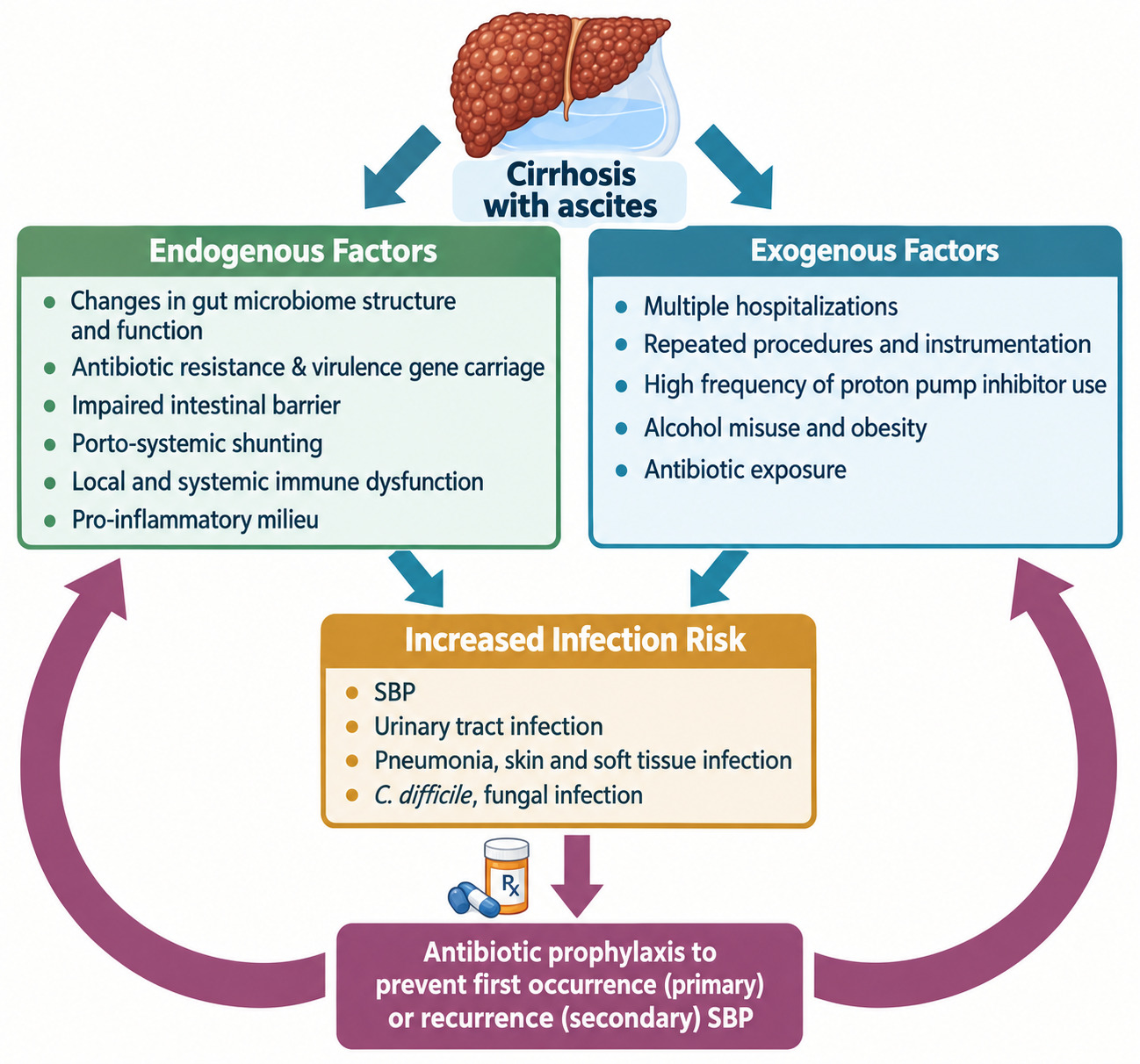
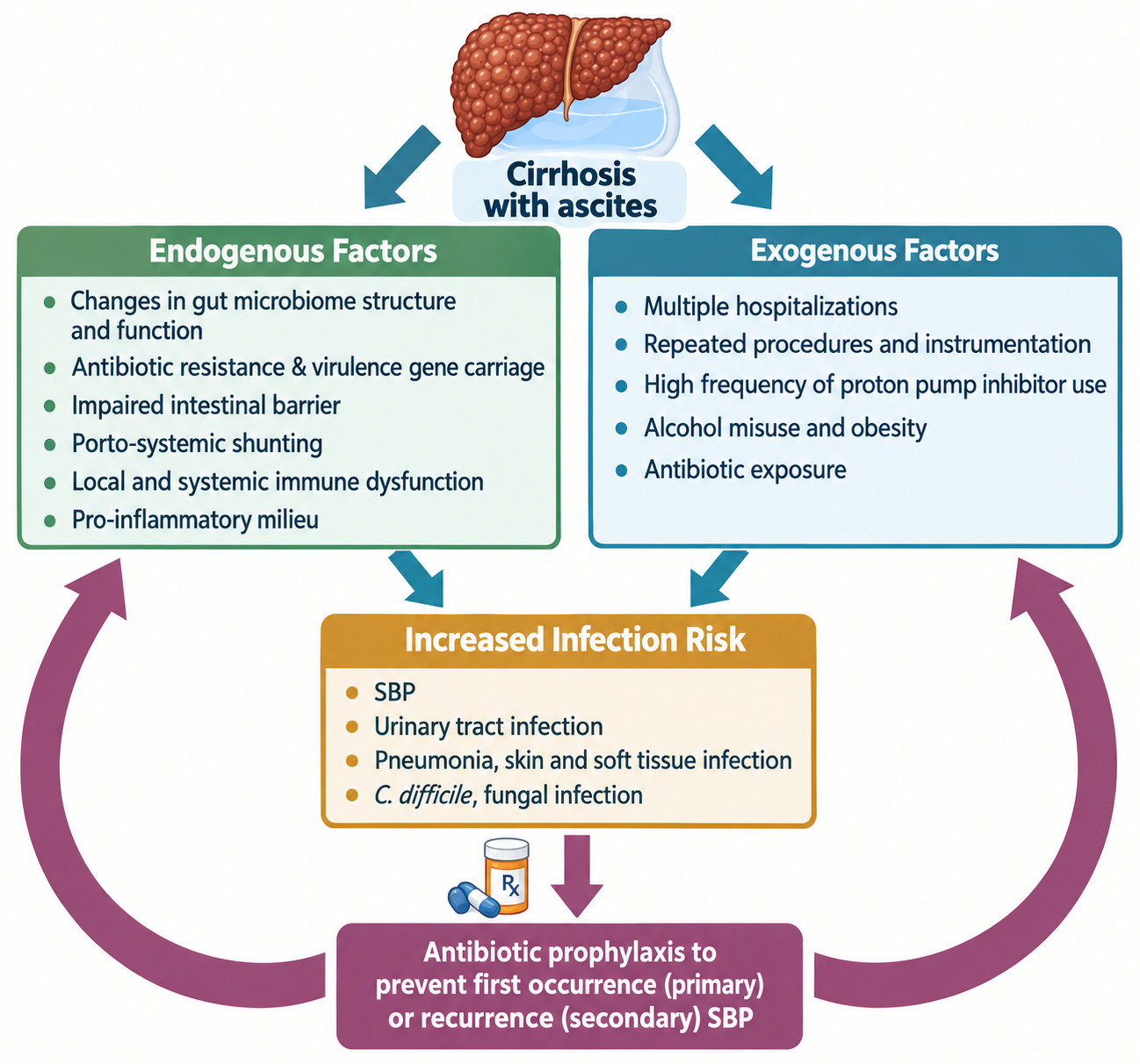
The role of antibiotics in the prevention and management of spontaneous bacterial peritonitis (SBP) has also undergone considerable reassessment (Figure 1).7 Historically, long-term primary antibiotic prophylaxis was considered for selected patients with cirrhosis and low ascitic fluid protein levels (<1.5 g/dL) who also had additional risk factors for infection or renal dysfunction. Short-term antibiotic prophylaxis was also routinely recommended for patients with cirrhosis presenting with acute upper gastrointestinal bleeding.8,9 However, emerging evidence, including findings from the ASEPTIC trial, has raised concerns that the risks associated with long-term primary prophylaxis may outweigh its benefits.10 Consequently, the traditional approach to primary antibiotic prophylaxis in cirrhosis is being reconsidered.11,12 Furthermore, in patients with upper gastrointestinal bleeding, newer data suggest that a three-day course of antibiotics may be sufficient for short-term prophylaxis rather than the previously recommended five-to-seven-day regimen.13
The optimal role and duration of long-term secondary antibiotic prophylaxis following an episode of SBP also remain areas of active investigation. Recent data from VHA and TriNetX studies have suggested that patients receiving secondary SBP prophylaxis may experience higher rates of non-SBP infections as well as recurrent SBP compared with those who do not receive prophylaxis. These findings highlight the need to re-evaluate the utility of routine secondary antibiotic prophylaxis in patients with cirrhosis and a history of SBP. Such decisions require careful consideration of the potential benefits of preventing recurrent infection against the broader risks associated with prolonged antibiotic exposure, including antimicrobial resistance, Clostridioides difficile infection, fungal infections, and other opportunistic infections.14,15 Overall, the rapidly evolving evidence across multiple medical disciplines underscores the need for clinicians to continually reassess established practices and incorporate emerging data into the management of hospitalized patients.