Background
Timely primary care physician (PCP) follow-up after hospital discharge has been shown to be associated with lower readmissions and is widely regarded across health systems as a best practice for transitions of care.1 However, post-discharge primary care follow-up visit completion rates may be suboptimal.2–5
Scheduling processes may play an important role in hospital post-discharge visit completion. Schedulers interface with operational constraints such as provider appointment availability, system processes, and patient preferences. In our academic health system, while schedulers routinely navigate barriers such as limited PCP appointment availability and patient preferences, their experiences were not previously captured in a systematic, structured way. As a result, quality improvement (QI) efforts for scheduling post-discharge PCP follow-up visits were often based on individual cases.
To the best of our knowledge, few studies have described scheduling process-related barriers to post-discharge PCP follow-up visits. Existing studies have predominantly focused on whether follow-up occurred, the importance of timing to prevent readmissions, and have also retrospectively examined barriers to completion. A pilot study using an embedded discharge appointment scheduler that incorporated patient scheduling preferences was associated with improved rates of scheduled and completed follow-up visits.6 Studies examining missed primary care appointments have identified barriers such as scheduling miscommunication, transportation challenges, insurance issues, discharge timing, competing obligations, and patient perceptions regarding the need for follow-up.7–9 However, these studies focused on why patients missed appointments after scheduling had already occurred, rather than the operational barriers encountered while trying to schedule post-discharge follow-up visits in the first place. Literature specifically looking at systematic capture of scheduler-reported barriers to timely follow-up within routine post-discharge workflows remains limited.1–3,5,6
The objectives of this QI project were to build an operational infrastructure for the scheduling process and identify, quantify, and monitor clinic-, PCP-, and patient-level scheduling barriers over time to inform QI efforts to improve post-discharge PCP follow-up visit completion rates. The goal was to support schedulers by creating standardized workflows that enable real-time capture of clinic-, PCP-, and patient-level scheduling barriers, then use iterative learning to refine processes that promote scheduling and timely completion of post-discharge primary care follow-up visits.
Methods
This was a QI project, and the University of California Los Angeles Institutional Review Board determined that it was not human subjects research. The project used core QI principles, such as Plan-Do-Study-Act (PDSA), to embed operational surveillance of barriers into scheduling workflows and support improvement efforts targeting timely post-discharge follow-up.
Context
This QI project was conducted from August 2022 through October 2024 within a large urban academic medical center with two main hospitals, 700 total beds, and more than 50 adult primary care clinics, with over 5000 post-discharge primary care follow-up visits per year. The health system serves a racially, ethnically, and socioeconomically diverse patient population, with two-thirds receiving public insurance from Medicare or Medicaid.
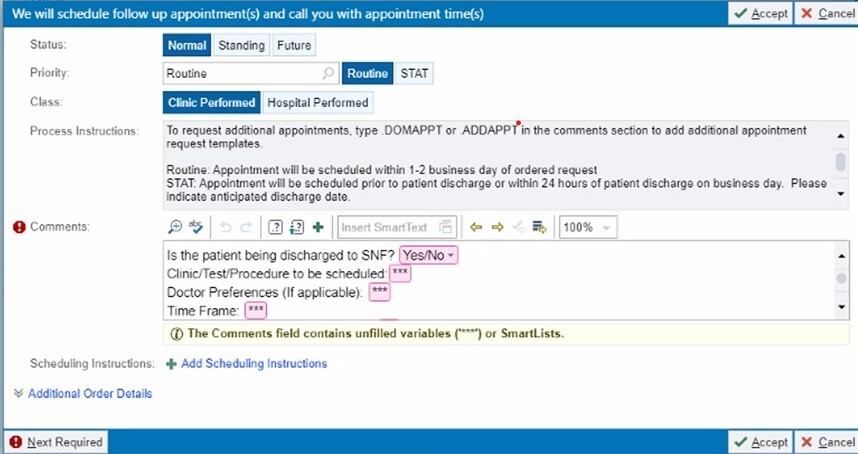
A dedicated team of administrative support staff (schedulers) scheduled post-discharge primary care follow-up appointments for patients discharged from inpatient medicine services. As part of the QI initiative, the QI team regularly met with scheduling team management and staff. Meetings were conducted to review internal data on primary care follow-up visit completion rates within 7 days of hospital discharge, as well as readmission rates, and subsequently stratified by whether patients were scheduled with their assigned PCP. Based on these team discussions, a standardized scheduling protocol was developed and implemented. Upon discharge from inpatient medicine services, hospitalist physicians placed a “We Will Schedule” communication order in the Epic Electronic Health Record (EHR) (Figure 1).
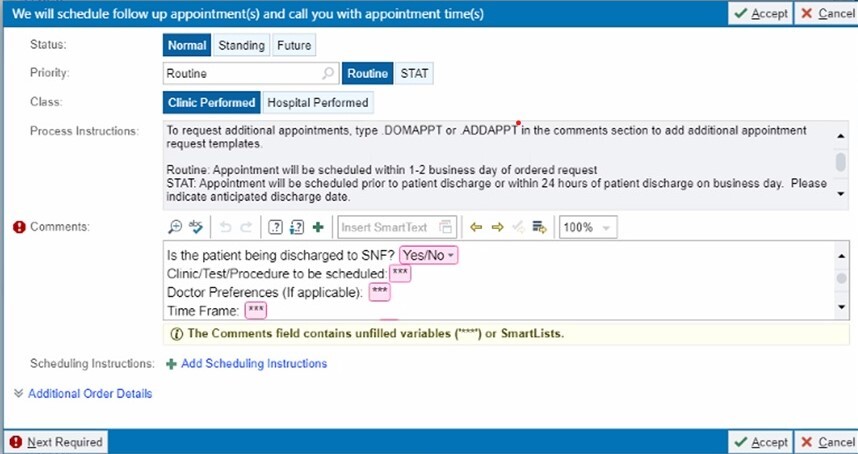
This automatically added the patient to a scheduling work queue. A scheduler then reviewed the patient’s clinical and demographic information and prioritized scheduling an appointment with the patient’s assigned PCP within 7 days of hospital discharge. Schedulers attempted to contact patients by telephone with up to three call attempts. Each scheduling effort was documented as a telephone encounter within the EHR using a SmartForm developed for this initiative. Once a patient had confirmed an appointment, the scheduler sent the patient a confirmation with agreed-upon appointment details. If an appointment was not able to be scheduled within this target timeframe, the scheduler identified and recorded a scheduling barrier using the SmartForm.
SmartForm Development and Scheduling Protocol Training
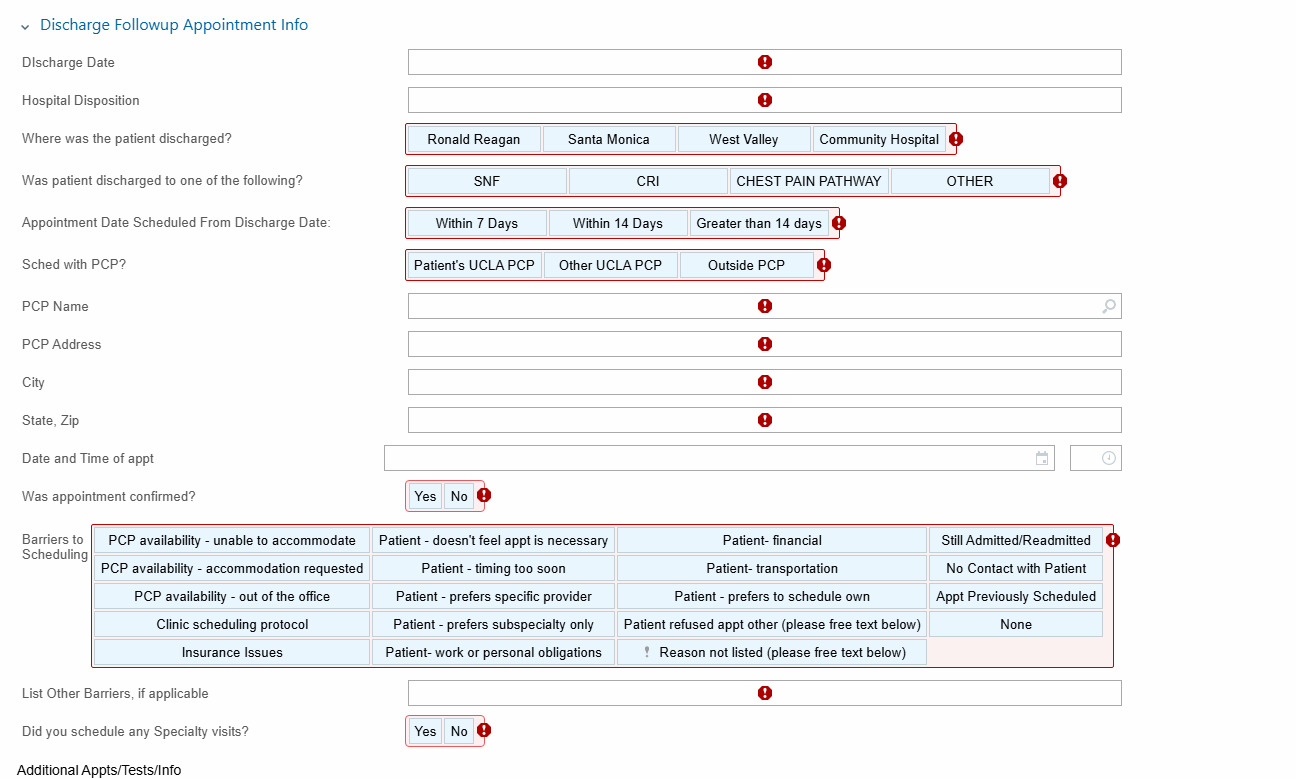
A SmartForm was developed and modified in an iterative process for this QI project within the EHR (Figure 2) to enable structured, real-time data capture within existing scheduling workflows. The SmartForm was conceived and designed to standardize documentation of all scheduling encounters and to capture scheduling barriers. Informational interviews with the scheduling staff were conducted to map the current state and identify common clinic or PCP-, and patient-level barriers to scheduling that were included in the preliminary SmartForm templates (Table 1).
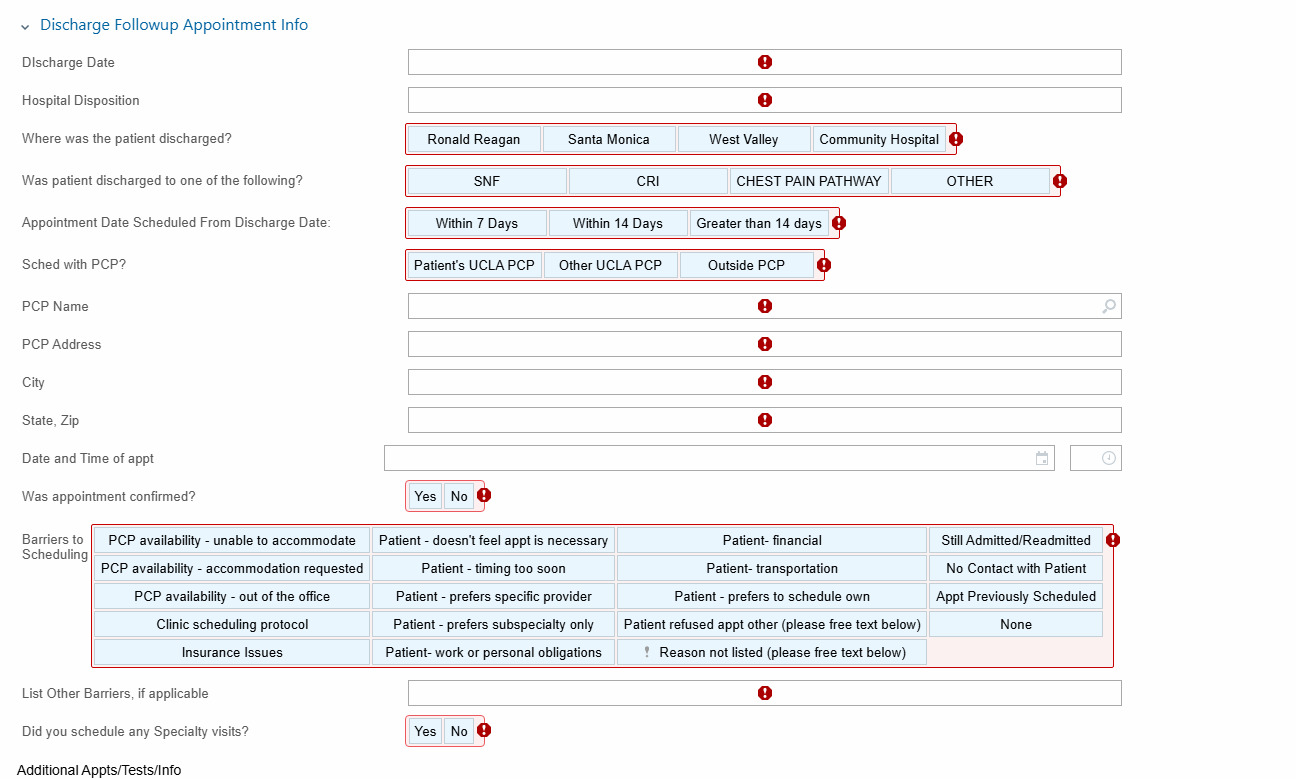
Encounters with “None” marked in the barrier entry section by schedulers reflected no scheduling barriers identified, whereas notes with “Reason not listed” marked indicated incomplete fields or barriers outside of predefined barriers in the SmartForm, and notes with the barrier entry section left blank represented empty or incomplete fields in the SmartForm. Through iterative PDSA cycles, the form was revised through monthly QI team review of the data. Modifications were also decided upon through feedback provided by the QI program manager to the administrative director to enable rapid refinements to improve usability, reliability, and accuracy of barrier classification.
The initial SmartForm focused primarily on capturing barriers to timely post-discharge PCP follow-up using structured barrier categories and free-text documentation. Subsequent iterations expanded the information that was collected to include more details, such as PCP attribution, appointment details, appointment confirmation status, and hospital location (Table 2).
As implementation progressed, additional scheduling barrier categories were added to address the most common scenarios that were not captured in the initial design but were seen repeatedly in the free text. These included patients who remained hospitalized or were readmitted before PCP follow-up visits could occur, inability to reach patients for PCP follow-up scheduling, and situations where an appointment had already been scheduled. Provider availability categories were also optimized to better distinguish between accommodation requests, inability to accommodate, and providers being out of office.
Scheduler training sessions were conducted to train staff how to use the scheduling protocol and SmartForm for proper documentation of the scheduling encounters and barriers. The lead trainer, in collaboration with the QI team, reviewed the SmartForm with scheduling staff and presented real-world examples to establish shared understanding and consensus regarding the scheduling protocol and barrier definitions. A comprehensive tip sheet was developed to support differentiation between barriers.
Analysis
Scheduling barrier data were collected in the SmartForm longitudinally over a 27-month period. Descriptive analyses were conducted to identify counts and proportions of barriers. The scheduling barriers were categorized into clinic-, PCP-, and patient-level barrier categories based on team discussions. The SmartForm note frequency was used as the unit of analysis because some patients had more than one scheduling note during the study period. We analyzed the barriers descriptively after excluding entries that were not useful for barrier classification, including notes where no barrier was identified or where the barrier was listed as “Reason Not Listed.” Barrier categories were grouped into clinic-, PCP-, and patient-level categories based on team review and the type of scheduling issue being documented. Since this was a QI project focused on operational improvement, the analysis focused on the frequency of documented barrier types. Recurring patterns or trends were reviewed during routine team meetings. We also routinely discussed how those patterns could support ongoing operational decisions and potential interventions by our QI team.
Results
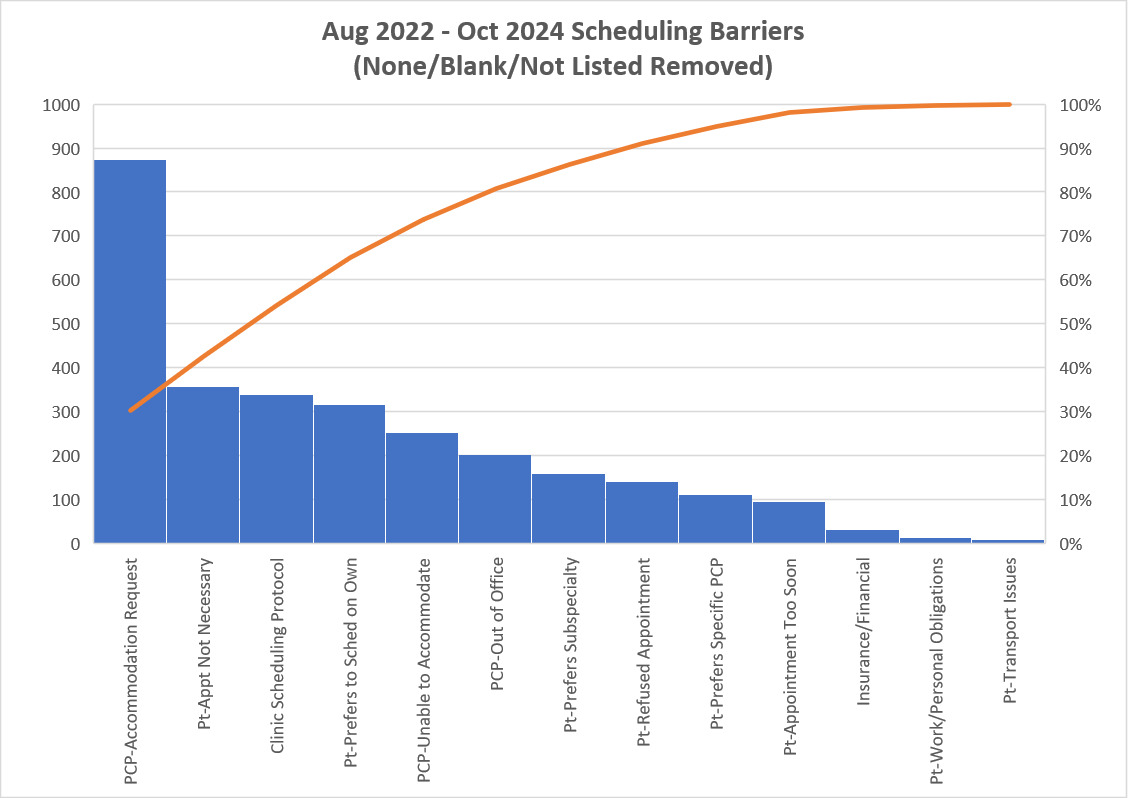
Scheduling staff documented 13,823 SmartForm notes for the 13,420 patients using the SmartForm. Scheduling barriers were identified and documented in 29% of encounters (n = 4,024). Encounters marked as “Reason Not Listed” were excluded for descriptive analyses of barriers, yielding 2,896 remaining encounters with barriers. The most frequently documented barrier category was PCP-level barriers (46%). The most common barriers in this category included lack of PCP availability within the target timeframe requiring an accommodation request (30%) and that the PCP was unable to accommodate the request (9%).
When a barrier related to PCP availability was identified, the request was escalated to the administrative director who sought a scheduling accommodation within the requested clinic and provider schedule. If an accommodation could not be obtained, the scheduler arranged a visit with another PCP within the patient’s usual primary care clinic within 7 days of discharge.
Patient-level barriers were the second most common barrier category, accounting for 42% of the documented barriers. These barriers included patients not feeling like the appointment was necessary (12%), patients preferring to schedule on their own (11%), and patients preferring to see a subspecialist (5%) (Figure 3). Less frequently reported barriers included clinic scheduling protocol issues (12%).
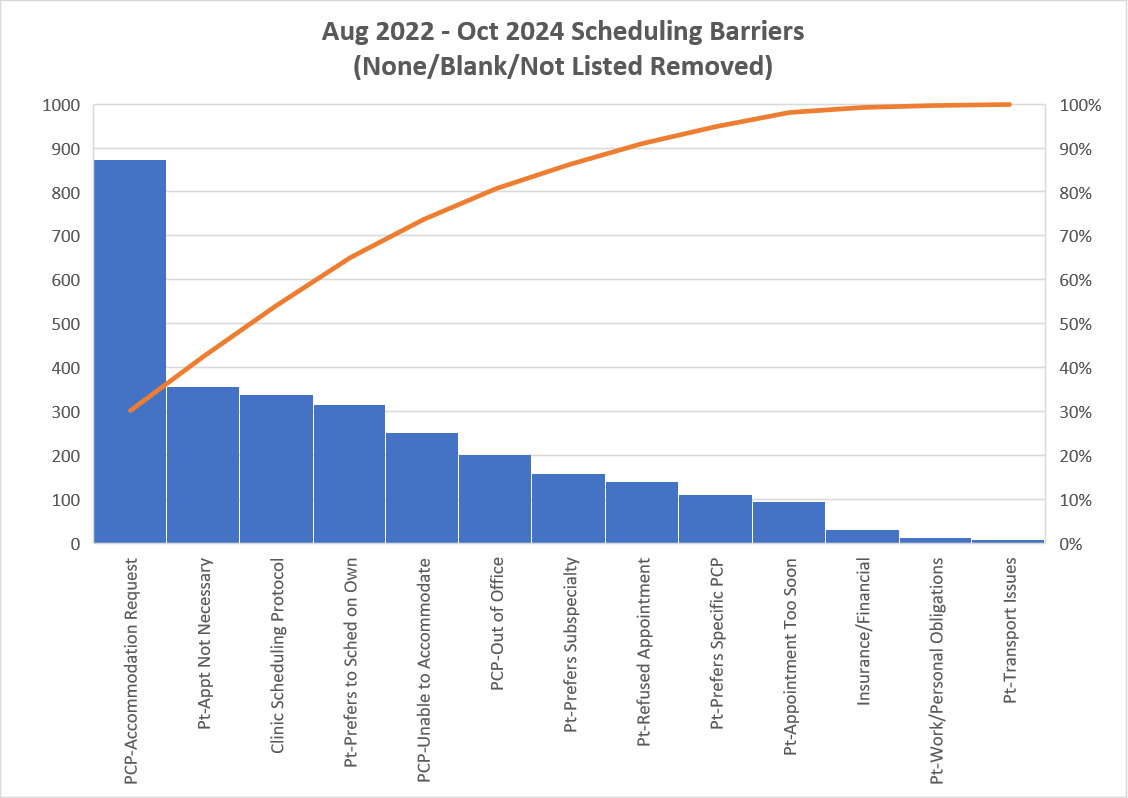
Clinic scheduling protocol issues included clinic specific workflows in which a clinic required internal review before scheduling, or instructions that the clinic needed to call the patient directly. These were categorized separately from PCP availability barriers when the issue was a clinic workflow rule rather than lack of appointment availability.
Based on subsequent PDSA cycle findings on common barriers, the team further highlighted and socialized the use of protected post-discharge hospital follow-up PCP appointment slots, emphasized pre-discharge patient education on the importance of follow up, and conducted targeted outreach and education with operational staff. Regional medical directors and workgroup members received monthly updates to support ongoing monitoring of scheduling barriers.
Discussion
In this QI project using a new, iteratively developed EHR tool to embed structured scheduling barrier capture into routine workflows, PCP availability and patient-related factors accounted for the majority of documented barriers to timely post-discharge PCP follow-up. This project used a systematic method for identifying barriers that had previously been tracked inconsistently or had only been discussed verbally. The data provided operational leadership with greater visibility into the factors preventing patients from obtaining follow-up within the 7-day target and informed data-driven rationale for targeted interventions to improve timely appointment scheduling.
Understanding scheduling barriers helped our health system identify root causes and prioritize process improvements in routine workflows. Primary care physician availability was the most prevalent barrier, highlighting the importance of aligning scheduling infrastructure with clinical care goals. As a result of this systematically collected data, operations teams implemented a targeted approach to creating and socializing protected post-discharge hospital follow-up appointment visits in PCP schedule templates. Identifying the second most common barrier of patients feeling that the primary care follow-up was not necessary highlighted opportunities for staff to better engage with patients on discharge planning and care transitions.
The PCP availability barrier was the most directly actionable because it was tied to multiple interventions. Introducing specific blocked slots enabled providers to keep slots open for recently discharged patients. Tracking use of protected slots for other visit types also allowed direct interventions to escalate potentially suboptimal uses to clinic directors and medical leads. Patient-related barriers were less directly resolved by scheduling infrastructure alone and instead pointed toward the need for improved discharge communication and patient education during transitions of care.
While previous studies have examined the impact of post-discharge primary care follow-up visits on readmissions, to the best of our knowledge few studies have investigated how health systems can identify and address barriers to scheduling visits in real-time.1–6 Consistent with our finding that some patients preferred scheduling flexibility, a previous pilot study implementing a dedicated scheduler that incorporated patients’ scheduling preferences was associated with improved rates of scheduled and completed follow-up visits.7 This QI project adds to the literature on operational processes that support visit scheduling using real-time scheduler-collected data to identify and address clinic-, PCP-, and patient-level barriers. A key strength of this work is its scalable QI-informed methodology that engaged frontline staff and embedded data capture into routine workflows leveraging existing EHR infrastructure. The iterative use of PDSA cycles was critical to optimizing the SmartForm and ensuring data reliability through regular feedback, training, and quality assurance reviews with the scheduling team leadership. This continuous feedback loop supported sustainable adoption and ongoing learning, rather than one-time implementation, and allowed for more adaptability over time.
This study had limitations. Data collection relied on scheduler documentation, which may not fully capture patient perspectives or downstream barriers that may contribute to visit completion. While this work identified and addressed key scheduling barriers, it was not designed to measure the causal impact of improved scheduling processes on follow-up visit completion or readmission rates. Additionally, this project was conducted within one academic health system and reflects the local context, which may limit generalizability to other health care settings. Several workflow components were specific to our health system, including the Epic-based “We Will Schedule” discharge order, the SmartForm developed, a dedicated ambulatory scheduling team, protected post-hospital follow-up visit slots, and barrier escalation pathways through scheduling and clinic leadership. However, health systems that use centralized scheduling, EHR-based documentation tools, and operational forums to review and act on barrier data could adapt this approach. These limitations inform potential directions for future work. The rates of scheduling and completion of 7-day post-discharge PCP follow-up will be compared before and after implementation of the SmartForm and related interventions, including protected hospital follow-up appointment slots and clinic outreach. Ongoing evaluation is needed to determine what interventions may meaningfully reduce PCP availability barriers and other scheduling barriers and improve 7-day PCP follow-up visit completion. Longitudinal analyses may assess whether process improvements translate into reductions in readmissions. Future efforts should also focus on addressing patient-related barriers by better understanding the communication patients engage in during discharge planning and their perspectives on care transitions.
Conclusion
This QI initiative demonstrated how embedding structured, real-time data capture using an EHR tool into existing scheduling workflows can improve understanding of barriers to scheduling timely post-discharge primary care follow-up. Collaborative review of the data using QI approaches informed the selection of potential process solutions for improving timely scheduling and tracking the impact of these interventions on targeted barriers over time. Health systems seeking to understand and improve timely post-discharge follow-up may consider adopting a similar approach tailored to their local context. This initiative highlights the value of interdisciplinary collaboration, data transparency, and continuous feedback loops in translating frontline observations into actionable system improvements.
Acknowledgments
We thank the UCLA hospitalist ambulatory scheduling team, clinic directors, and care management partners for their essential collaboration. Special thanks to Anna Dermenchyan, Jessica Leyva, Yolanda Christenson, and Monique Keeles.
Funding Information
Funding/Support: Dr. Zhang was supported by the US National Institutes of Health/National Center for Advancing Translational Science (UCLA CTSI Grant Number TL1TR001883), UCLA Department of Medicine, UCLA National Clinician Scholars Program, and UCLA Specialty Training and Advanced Research Program.
Role of the Funder/Sponsor: The funders had no role in the design and conduct of the study; collection, management, analysis, and interpretation of the data; preparation, review, or approval of the manuscript; and decision to submit the manuscript for publication. The content is solely the responsibility of the authors and does not necessarily represent the official views of the funders.
Disclosures/Conflicts of Interest
The authors declare there is no conflict of interest.
Corresponding Author
Brian K. Le, MPH
UCLA Health
Email: bkle@mednet.ucla.edu